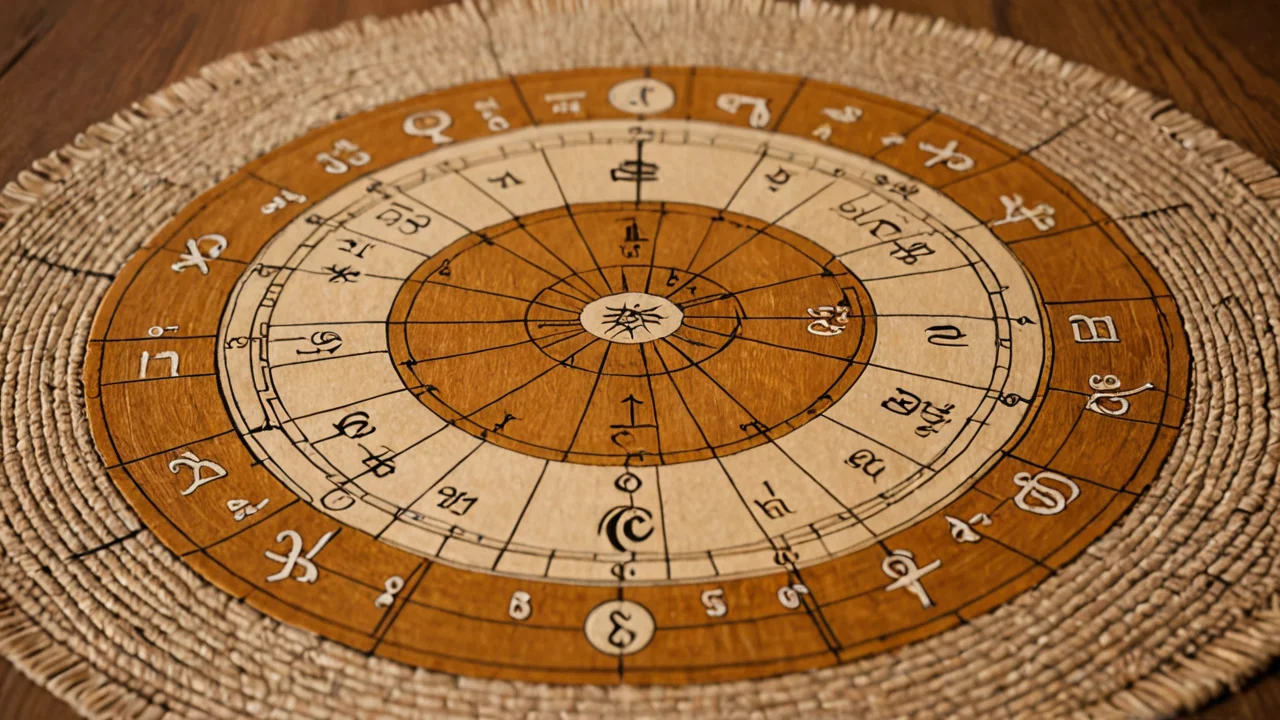
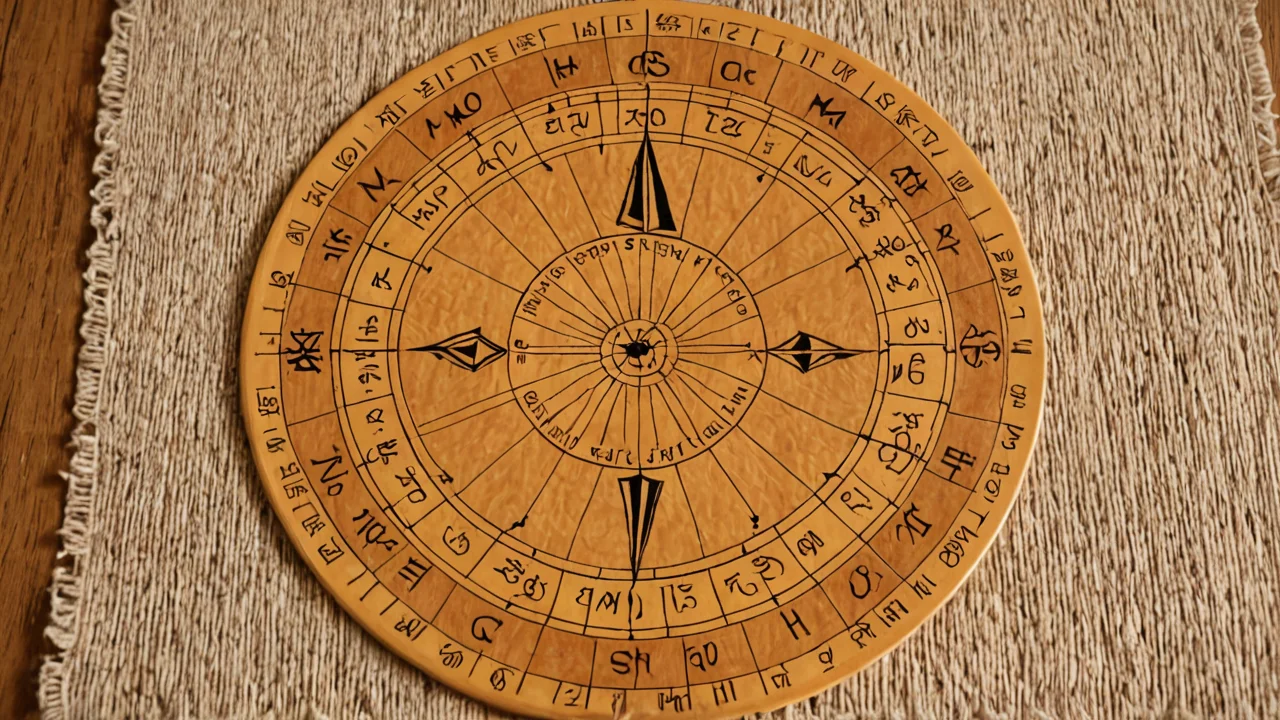
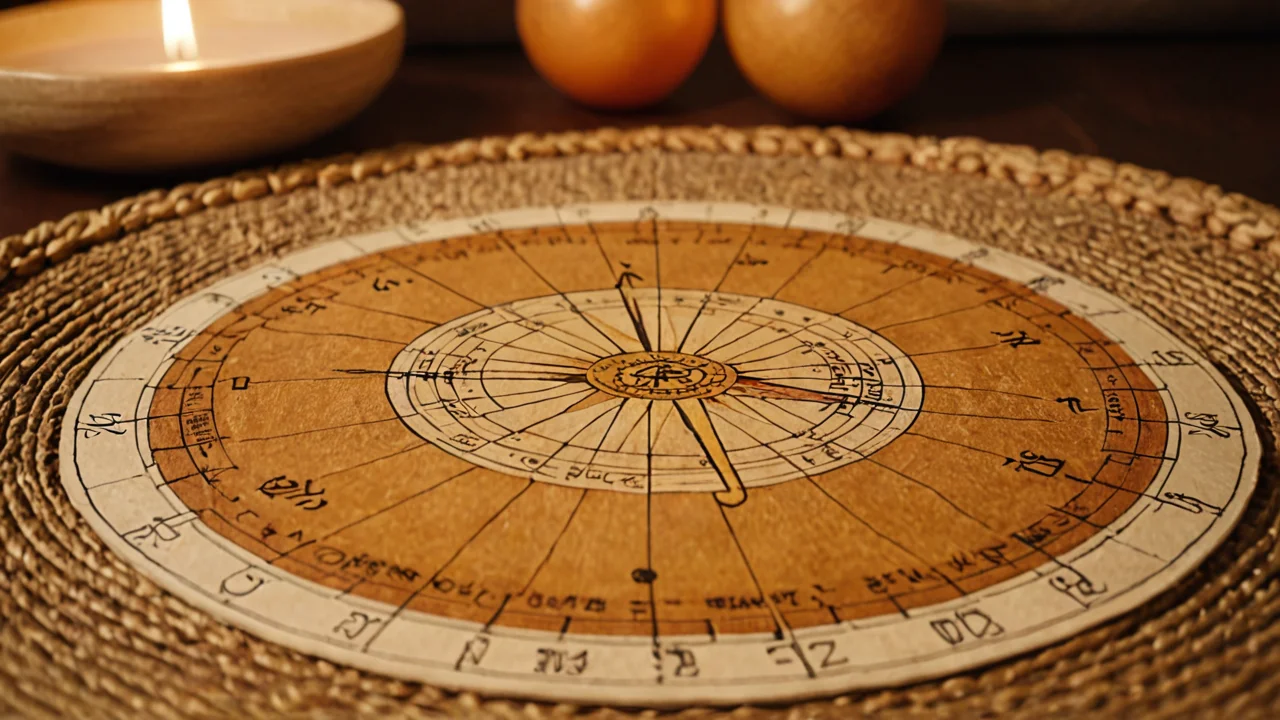
The short answer: a natal chart is a diagram of the sky at your birth, and reading it means working through a fixed sequence of decisions — which house system, which zodiac, which technique — each of which changes what you see. The chart itself is not in dispute; the interpretive frame is. Two astrologers looking at the same birth data can reach different readings without either making an error, because they chose different frames. Getting a useful reading means knowing which frame you are in and what it costs you.
What a natal chart actually is, and why the Ascendant organizes it
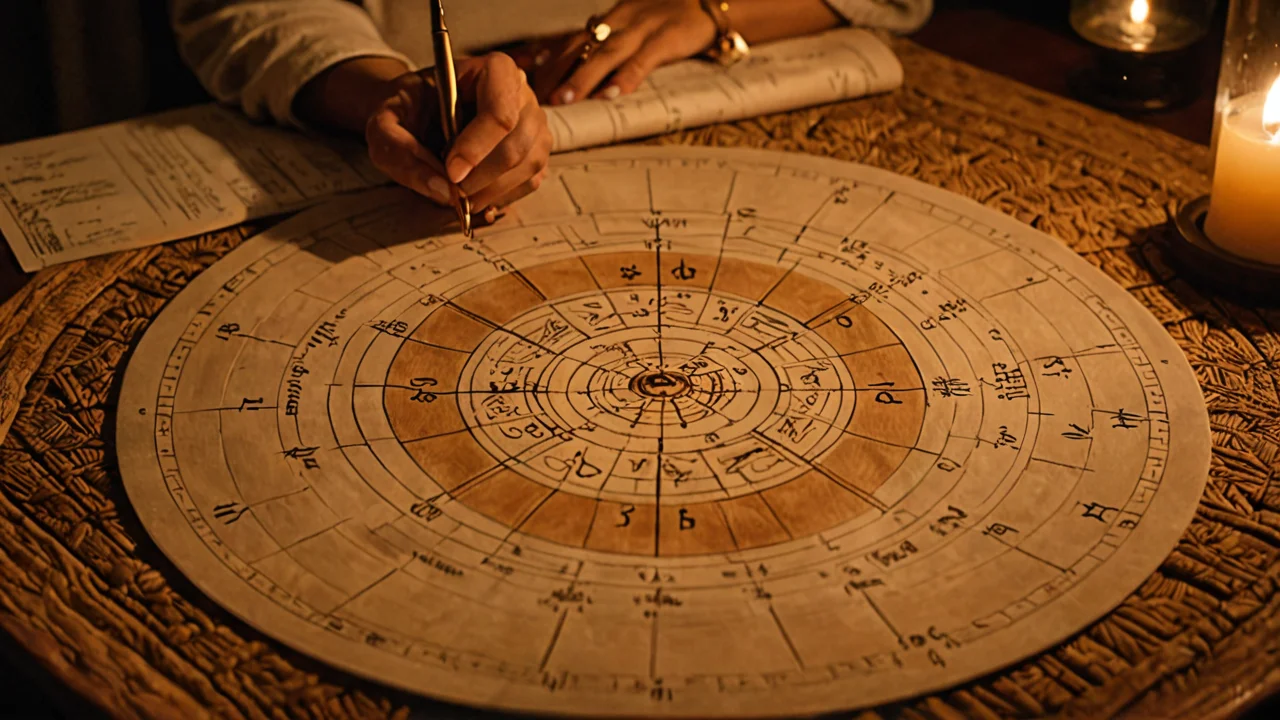
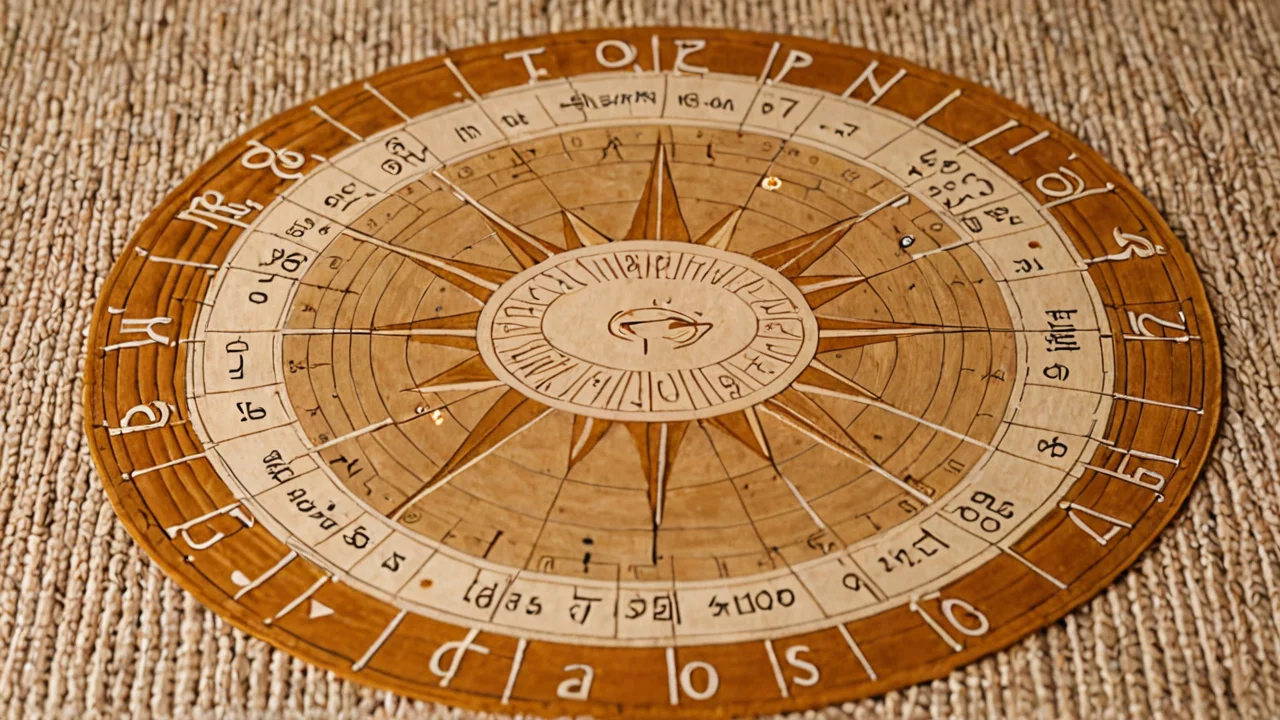
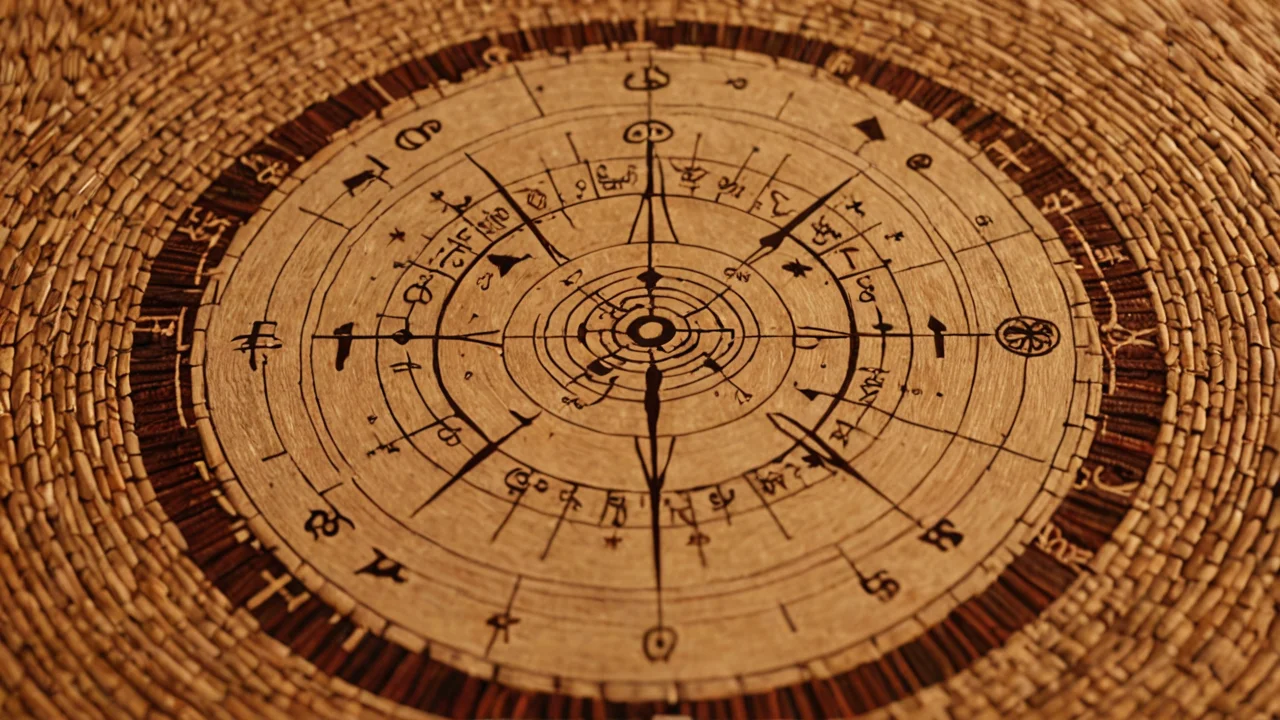
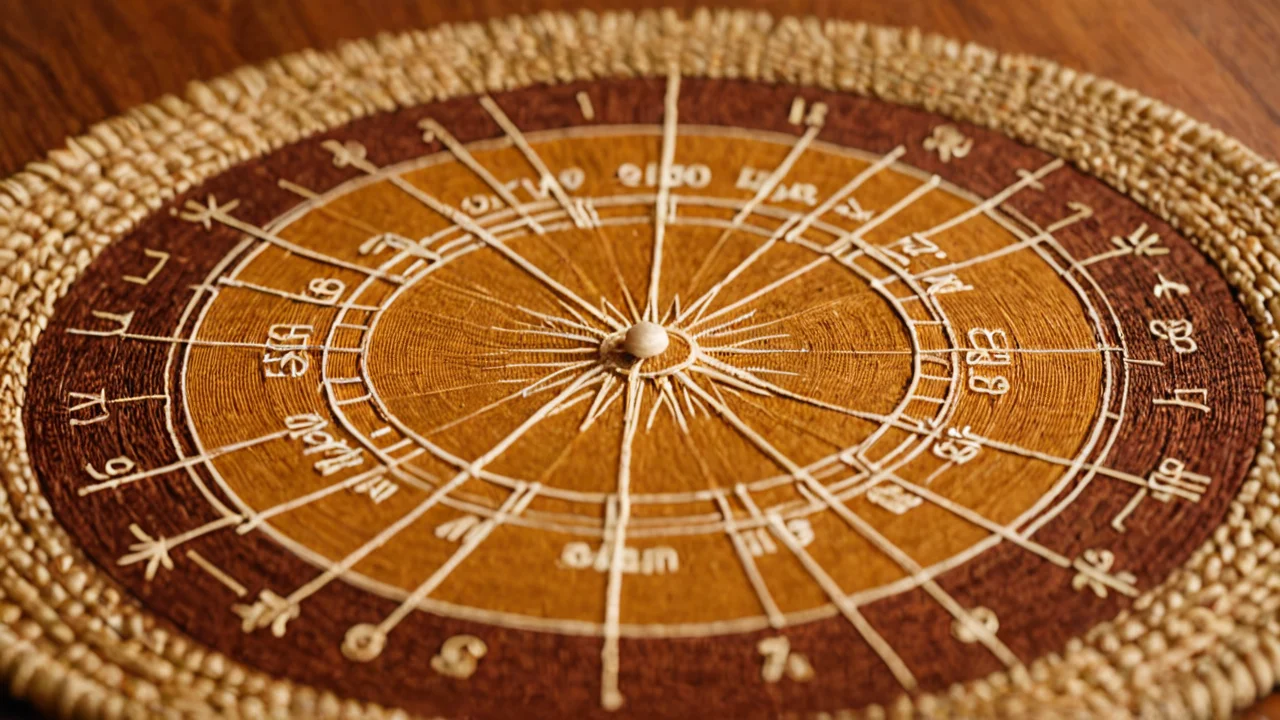
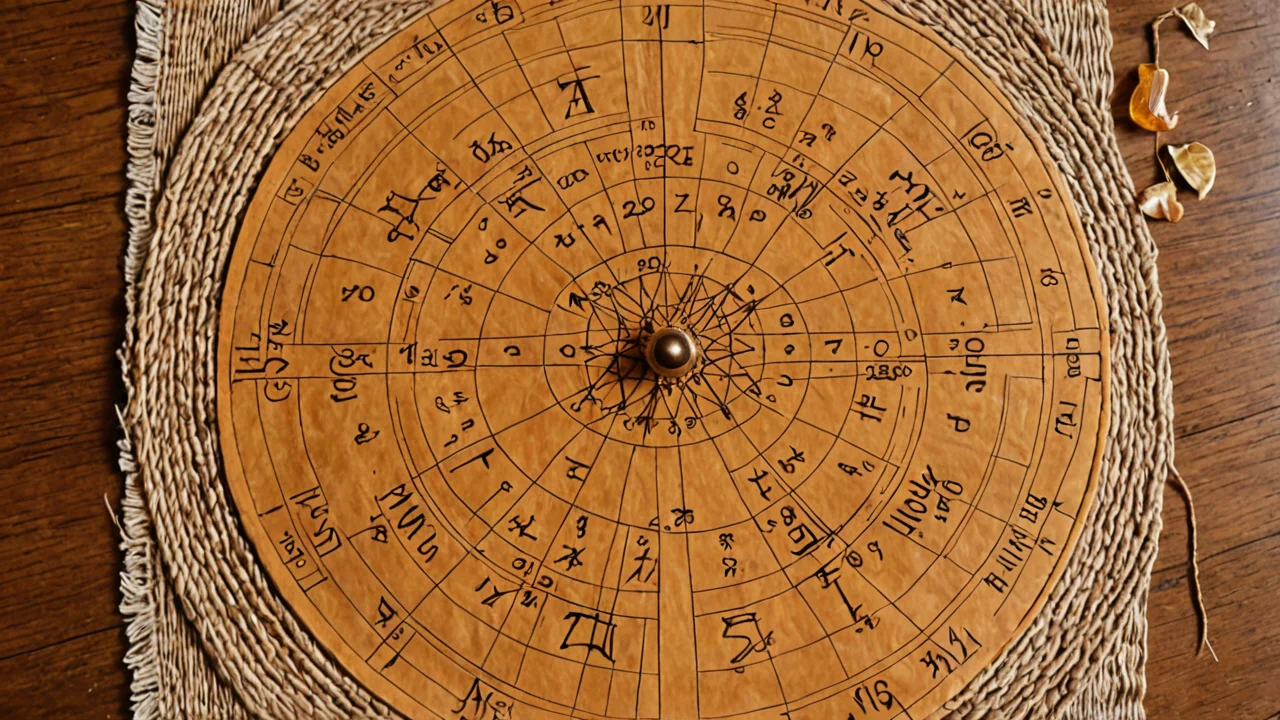
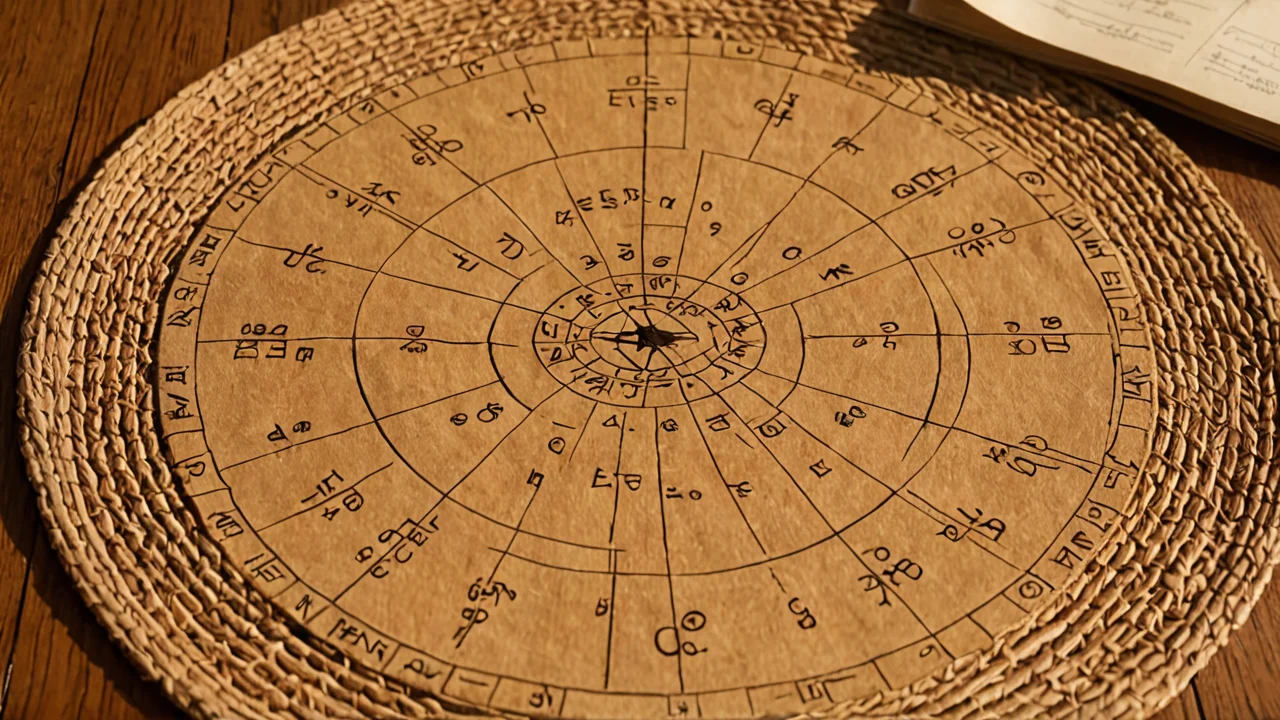
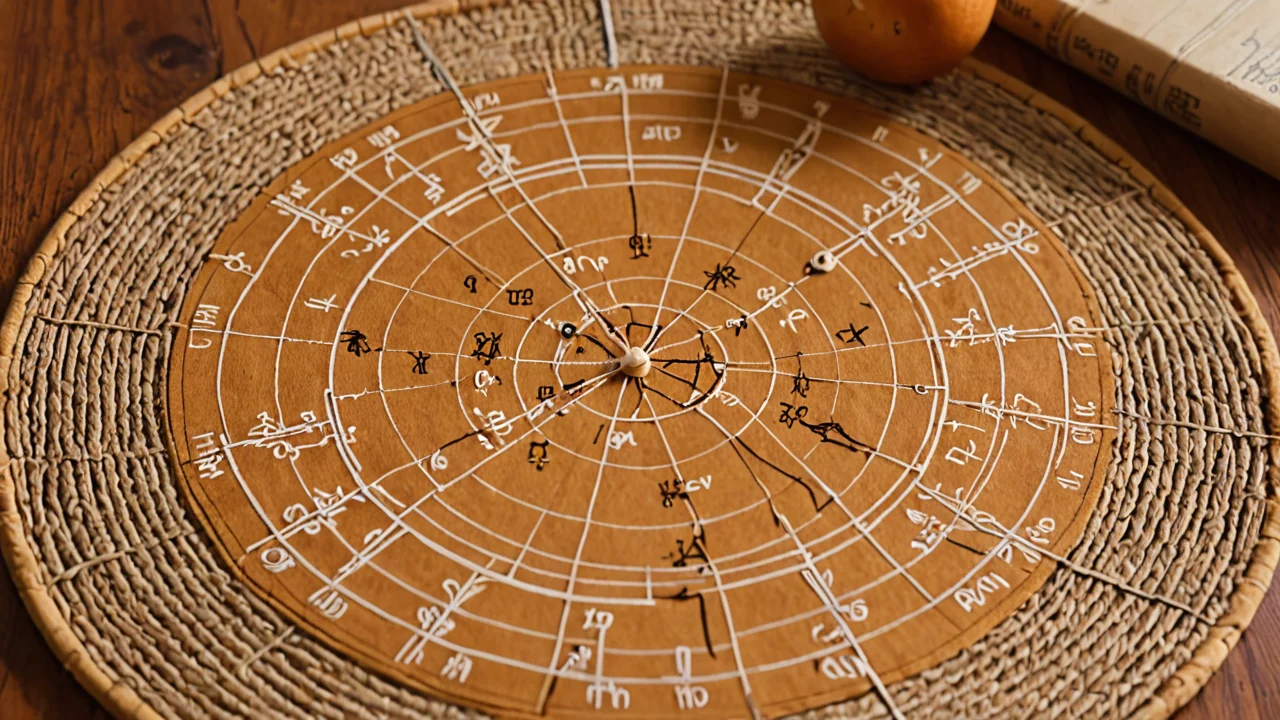
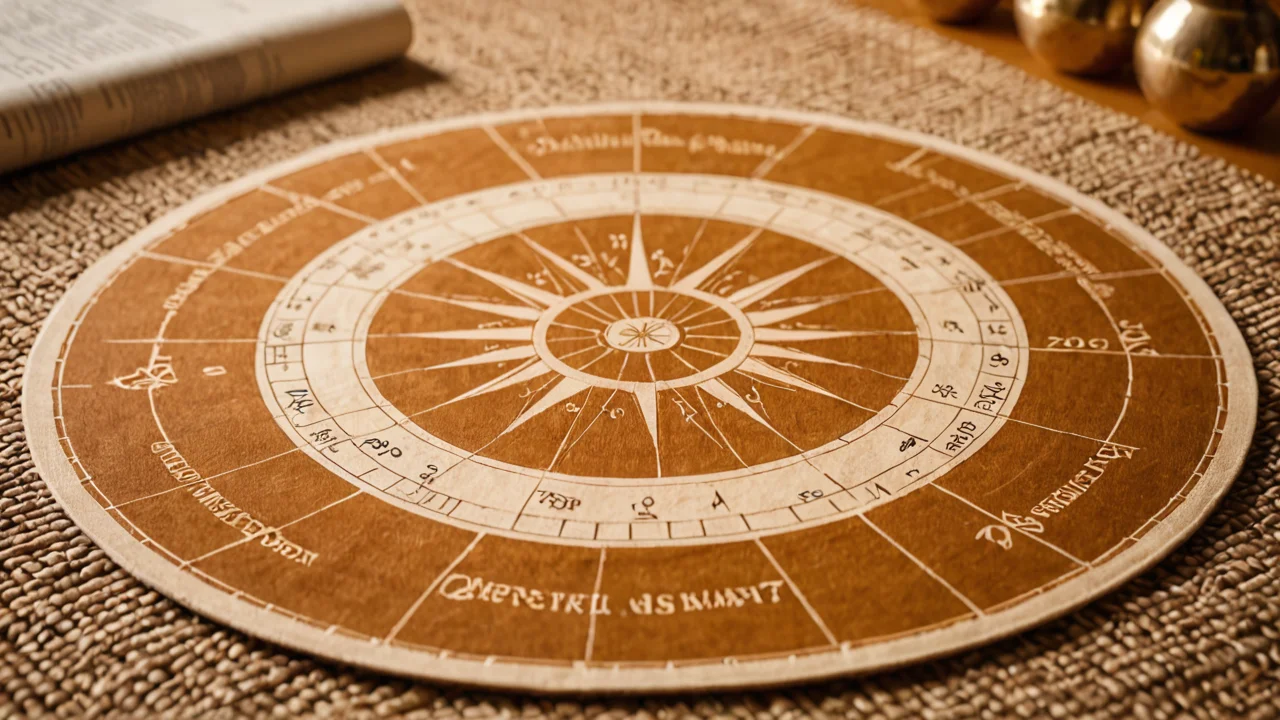
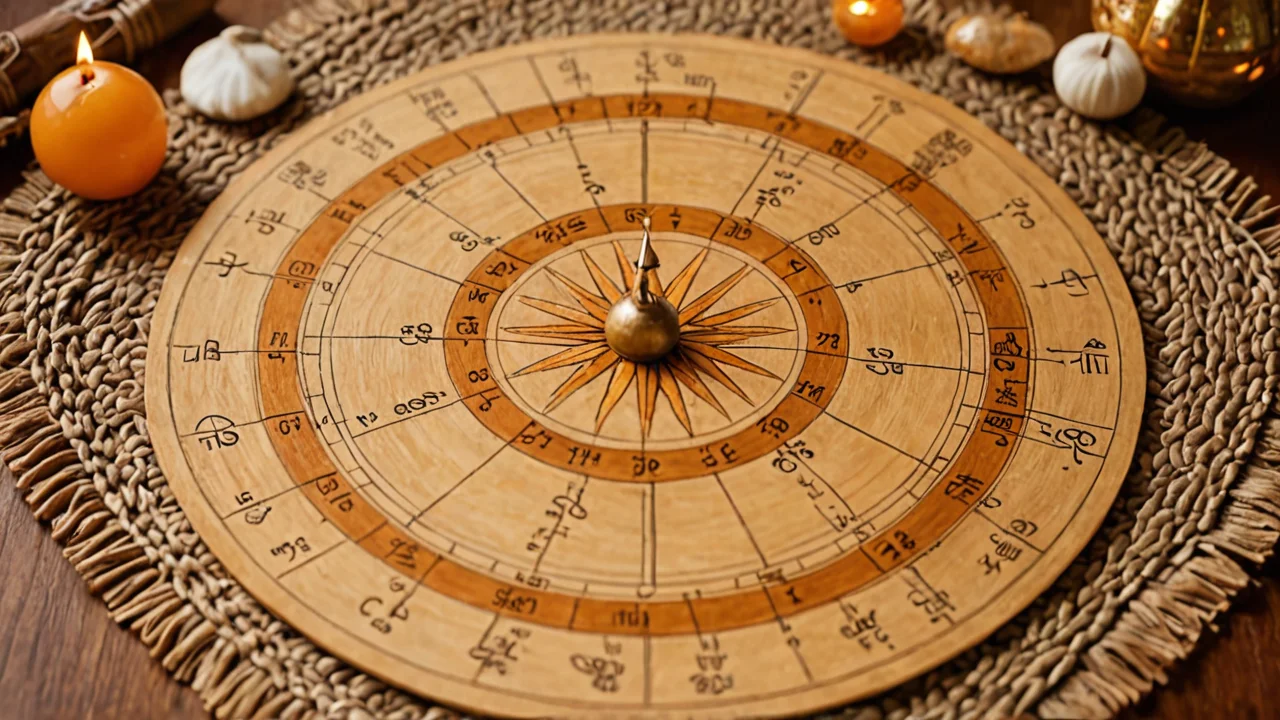
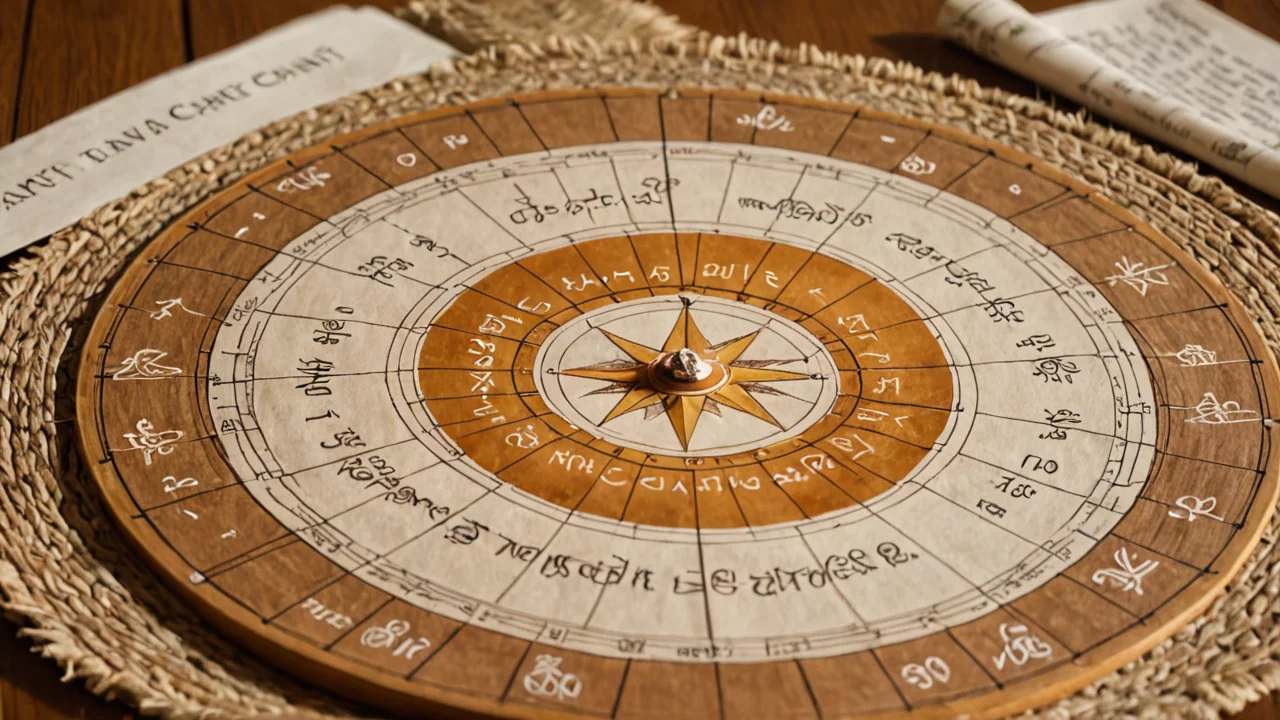
A natal chart is a diagram of the positions of the Sun, Moon, planets, and angles at the moment and place of a person's birth. That is the whole of the object. Everything else — the houses, the aspects, the dignities — is a layer of interpretation placed on top of a set of astronomical positions.
The tradition that chartmoss works in is Hellenistic, and its defining structural choice is that the chart is built around the Ascendant rather than around the Sun. Scholarship on Hellenistic astrology describes that tradition as the first to make the Ascendant a structural feature of natal interpretation. That is a historical claim about technique, not about validity, but it explains why the older material reads so differently from a newspaper Sun-sign column. The Ascendant is the zodiac sign rising on the eastern horizon at the moment and place of birth — the Greek term horoskopos means "hour-marker," and historical summaries note it appears in the Greek manuscript tradition associated with Ptolemy's Tetrabiblos. The word for the whole art and the word for the rising degree are the same word. The hour is the unit.
This has a practical consequence that catches people early. The Ascendant moves through the entire zodiac in roughly a day, so it changes sign every couple of hours, and near some latitudes much faster. A birth time recorded to the nearest half hour is usually enough to fix the rising sign; a birth time rounded to "around lunchtime" often is not. If your time is uncertain, the Ascendant is the first thing that becomes unstable, and the houses rotate with it. The Sun sign, by contrast, survives almost any uncertainty in the time — it only needs the date.
The cost of the Ascendant-centered frame is that it demands accurate data. The cost of the Sun-centered frame is that it throws away most of the chart. Most people who get frustrated with astrology get frustrated at the seam between those two positions.
The three placements everyone starts with, and what each one can and cannot carry
Start with the Sun, the Moon, and the rising sign, in that order of data reliability and reverse order of structural importance. The Sun sign is the zodiac sign the Sun occupied at birth; the Moon sign is the zodiac sign the Moon occupied at birth; the rising sign is the zodiac sign on the eastern horizon at the moment and place of birth, also called the Ascendant. Those are the definitions. What the tradition does with them is another matter.
In the Hellenistic frame the Ascendant is the anchor of the whole chart — it fixes the first house, and the twelve houses are counted from it. The Sun and Moon are then read in relation to that anchor and to each other. The Moon changes sign roughly every two and a half days, so a birth on a day when the Moon is near a sign boundary can flip the Moon sign depending on the hour; this is the single most common source of "my Moon sign changed" complaints. The Sun is the most stable of the three and therefore the least informative about the specific moment.
What each placement can carry is limited by what it is. A Sun sign statement is a statement about a season. A Moon sign statement is a statement about a day and a half window. A rising sign statement is a statement about a two-hour window at a specific latitude. If someone tells you your rising sign means something and your birth time is a guess, the honest response is that the statement rests on a guess. Practitioners who work with clients learn to ask for the birth certificate before they will say much about the Ascendant at all.
The trade-off in starting here is that the three-placement summary is the most popular way into astrology and the least rigorous. It is a fair introduction to the vocabulary and a poor basis for anything else. The moment you want to know why two people with the same Sun sign behave differently, the three placements stop answering and the houses begin.
Choosing a house system is the decision that changes the most
There is no single house system, and the choice you make is the largest fork in natal interpretation. Whole sign houses put each sign entirely in one house, so the first house is the whole rising sign and every house is exactly one sign wide. Placidus, Koch, Regiomontanus, Campanus, and Equal are quadrant or semi-quadrant systems that divide the space between the angles by time or by arc, which means houses of unequal width and a Midheaven that does not necessarily sit on the tenth cusp.
The Hellenistic revival has pushed whole sign houses back into wide use, on the argument that it is the system the earliest surviving technical texts describe. That argument is historical, and it is strong as far as it goes. It does not settle which system gives a better reading, because that question is not historical. What it does settle is that whole sign is not a novelty or a shortcut; it is the older method, and the quadrant systems are later refinements built for a different set of concerns.
The practical differences show up in three places. First, at high latitudes, where Placidus and Koch can produce houses so distorted that some software refuses to calculate them; whole sign and Equal never break. Second, when a planet sits just past the cusp of a sign — under whole sign it lands cleanly in the next house, under a quadrant system it may sit in the previous one. Third, with the Midheaven, which quadrant systems treat as a house cusp and whole sign does not. If your career reading depends on which house your Midheaven falls in, the system choice is doing a lot of the work.
The cost of whole sign is that it ignores the actual geometry of the sky above the horizon; the cost of the quadrant systems is that they can buckle near the poles and that they disagree with each other. Neither cost is hidden. A reader who does not tell you which system they used has told you very little.
Sidereal or tropical, and why the ayanamsa question does not go away
Tropical astrology measures from the equinox; sidereal astrology measures from the fixed stars. The two frames have drifted apart by roughly a sign over the past two millennia because of precession, so a planet the tropical chart places in one sign the sidereal chart may place in the previous one. This is the single most consequential disagreement in the field and it cannot be resolved by preferring one.
The Western tradition chartmoss covers is tropical, which is why the Sun sign most people know matches the tropical calculation. Vedic and other sidereal traditions use a correction called the ayanamsa to convert between frames, and different schools use different ayanamsa values, which means even sidereal astrologers do not all agree on where the boundary sits. Within the tropical frame there is no ambiguity: the equinox is the zero point and everyone measures from it.
What the choice costs you is comparability. A tropical reading and a sidereal reading of the same birth are not two opinions about one chart; they are readings of two different charts. If you switch frames mid-study, your notes stop being usable against each other. Pick one, learn its logic, and treat the other as a separate discipline with its own literature. The most common mistake is to read a sidereal interpretation of a planet and apply it to a tropical placement without converting, which produces a reading that belongs to neither system.
What the aspects and dignities add, and where they stop being decisive
Aspects are angular relationships between planets, measured in degrees of zodiacal longitude. The tradition's major aspects — conjunction, sextile, square, trine, opposition — are the ones that carry most of the interpretive weight, and the minor ones are where practitioners divide. Orbs, the allowable margin of error around an exact aspect, are a matter of convention rather than calculation, and generous orbs will give you a chart full of aspects while tight orbs will give you three or four. The tighter you set them, the fewer claims you make and the stronger each one is.
Dignity is the tradition's system for ranking how comfortably a planet operates in a given sign — domicile, exaltation, detriment, fall, and the various conditions of reception. It is the part of the older material most often dropped in modern practice and the part that most changes a reading when it is restored. A planet in its own sign and a planet in its fall are not doing the same work even if they aspect the same points. The cost of including dignities is that the reading gets more technical and more deterministic-sounding; the cost of excluding them is that you lose the tradition's own weighting system and end up treating every placement as equally loud.
Where aspects and dignities stop being decisive is at the level of the person. The tradition holds that these configurations shape temperament and circumstance; it does not hold that they determine outcomes, and the older texts are explicit that a chart is a description of conditions rather than a verdict. Practitioners vary widely on how far to push this. Some read a hard aspect as a difficulty to be managed, others as a source of drive. Both readings are within the tradition; neither is a finding.
What a reading can and cannot tell you, and how to tell a good one from a bad one
A natal reading is an interpretation of a diagram, and its quality depends on the accuracy of the birth data, the transparency of the frame, and the discipline of the reader. It is not a measurement of the person, and it cannot be checked the way a measurement can. What you can check is the reasoning: which house system, which zodiac, which orbs, which technique, and whether the reader says so.
The single best signal of a careful reading is that the reader tells you what their conclusions depend on. If a claim about your career rests on the Midheaven, they should say so, because under a different house system the Midheaven may not be a cusp at all. If a claim about your temperament rests on the Ascendant, they should ask for the birth time, because without it the Ascendant is a guess. A reading that never mentions its frame is not more authoritative; it is less legible.
The tradition's own limits are worth stating plainly. In jyotish and in the Hellenistic material alike, the chart is held to describe conditions and tendencies, not to fix outcomes, and the practice is understood as a way of thinking about a life rather than a way of predicting one. Practitioners describe the work as interpretive and cumulative — you build a picture from many small placements rather than reading one placement as a verdict. What people report from a good reading is recognition, not prediction: the chart names something they already half knew. That is a description of the experience, not evidence for the system, and the two should not be confused.
The cost of taking it seriously is time — learning the houses, the dignities, the aspect logic, and the frame decisions takes longer than a weekend — and the cost of not taking the frame decisions seriously is a pile of readings that contradict each other for reasons nobody names. The useful middle is to pick a frame, learn it thoroughly, and stay honest about what it can and cannot carry. The chart is a diagram of an hour. What you make of the hour is the reading, and the reading is always someone's interpretation.