
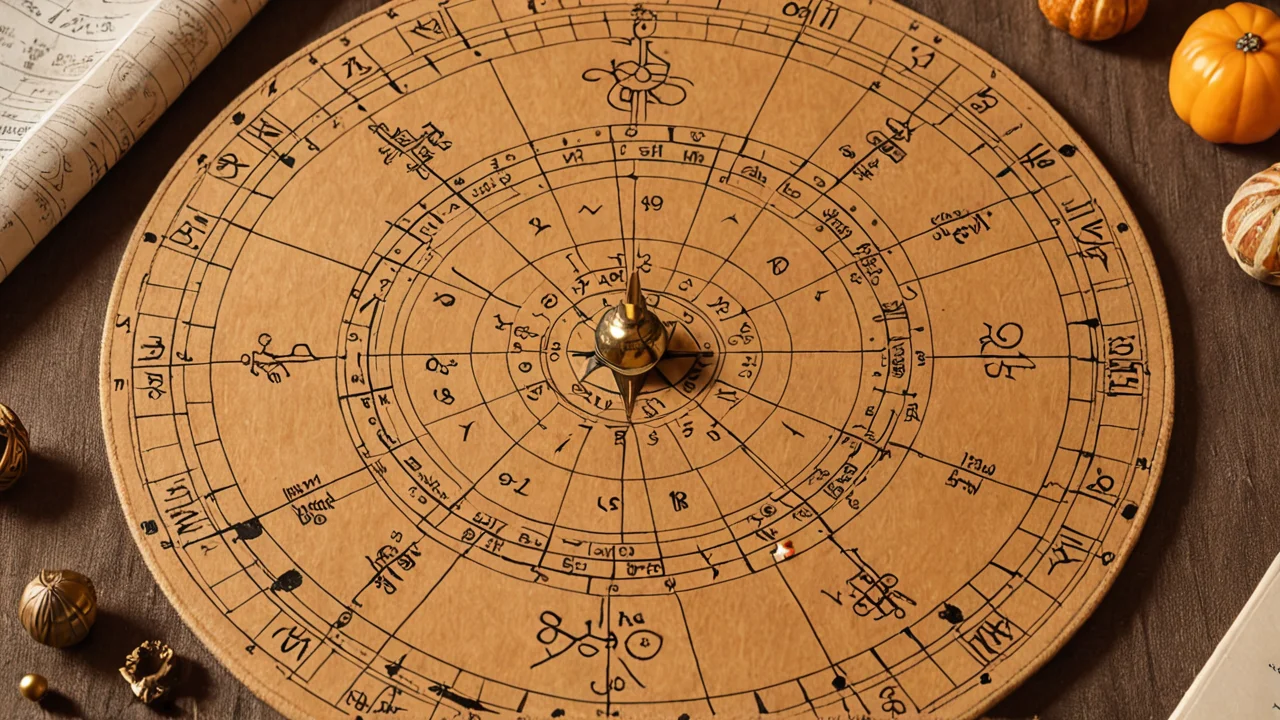

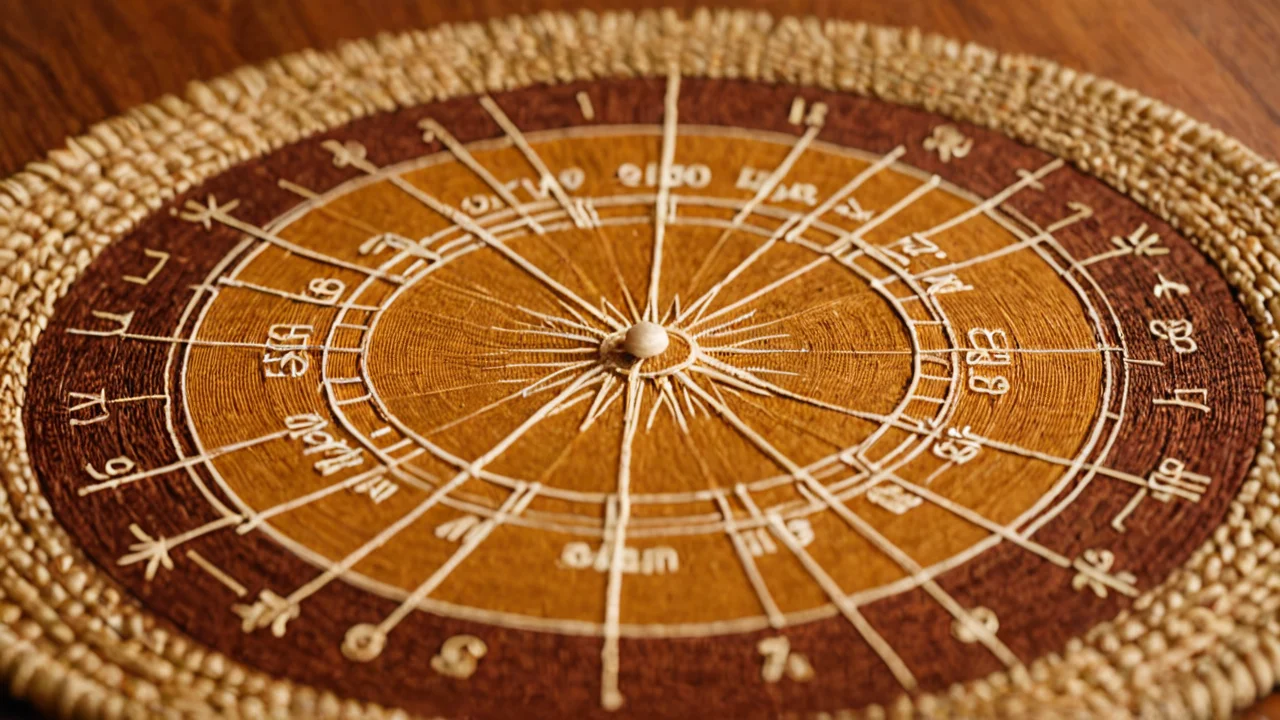
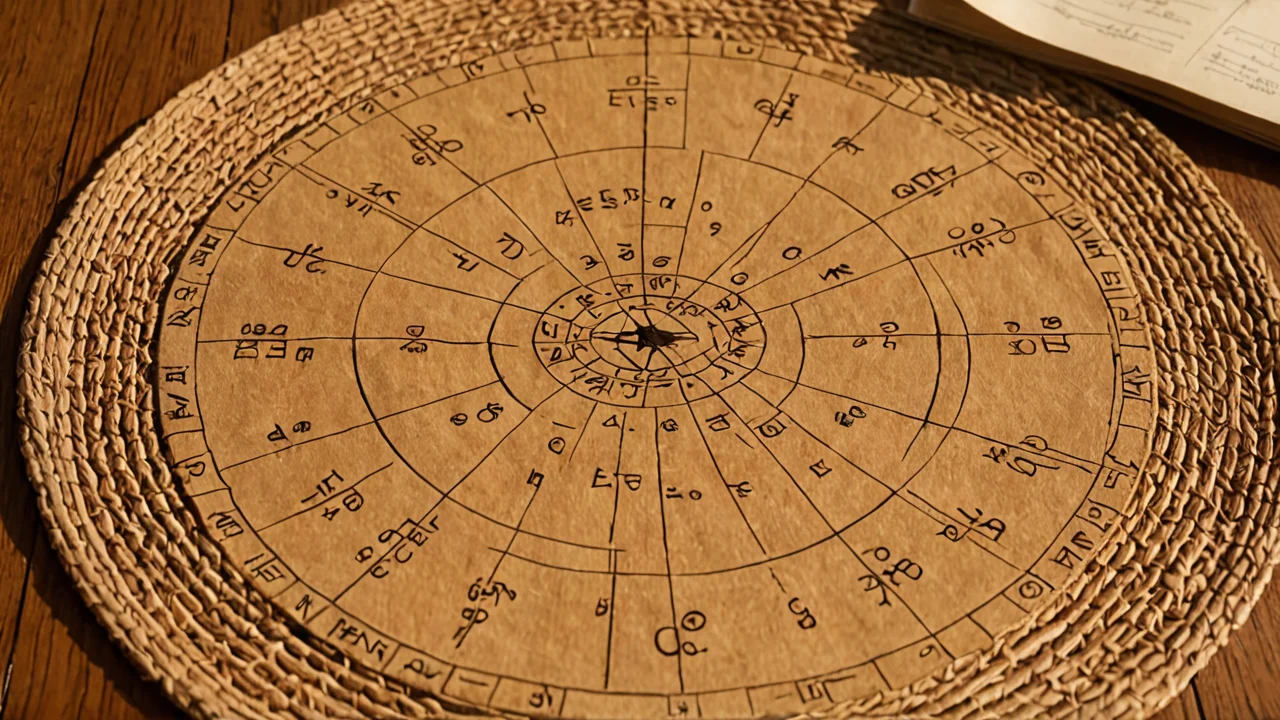
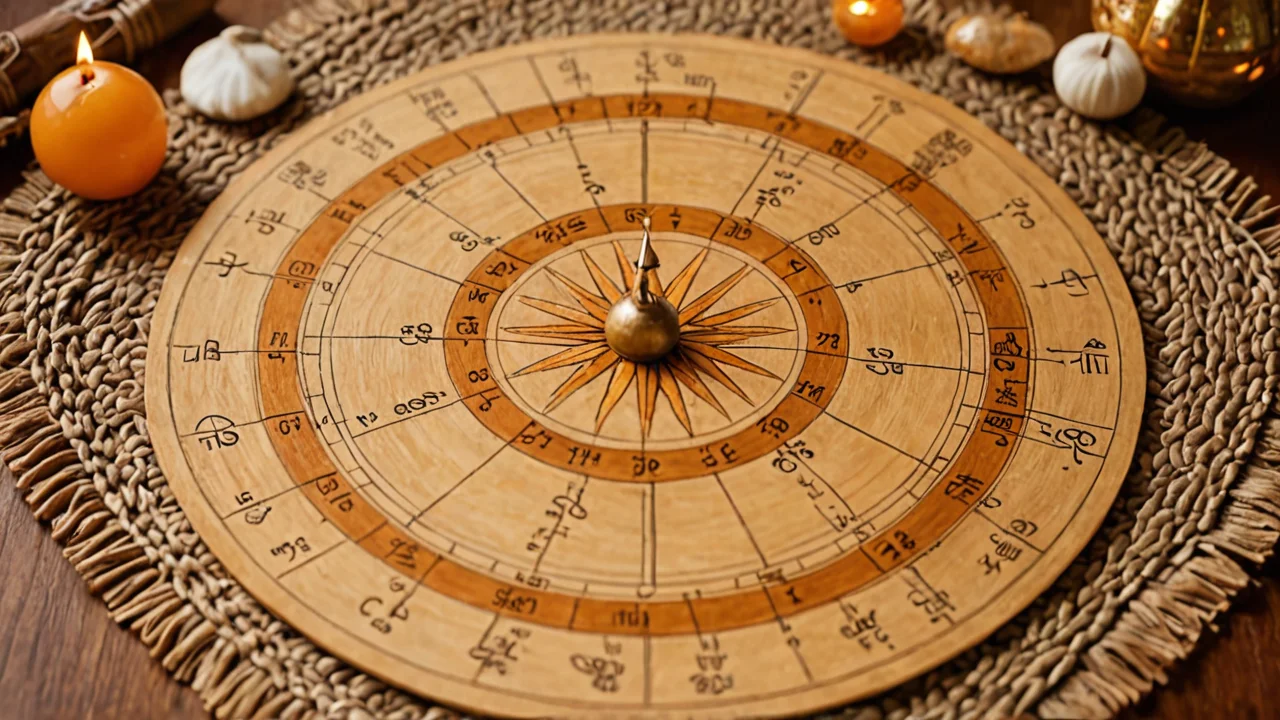
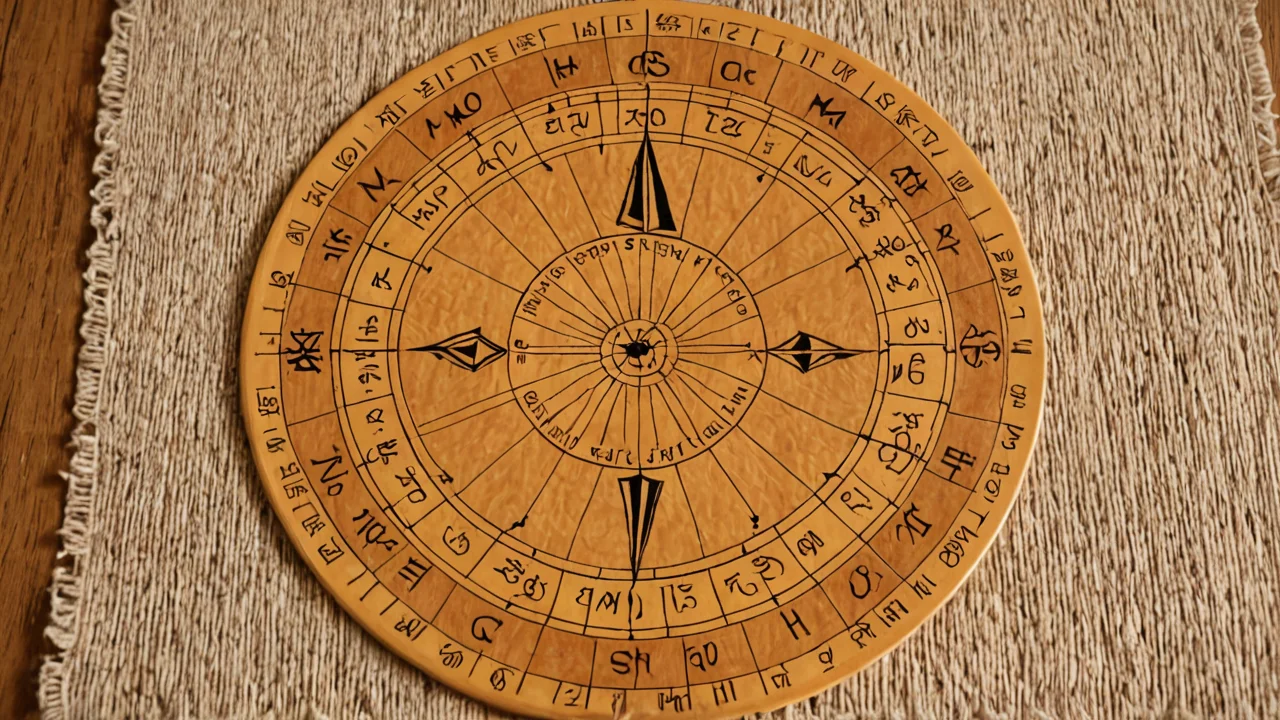
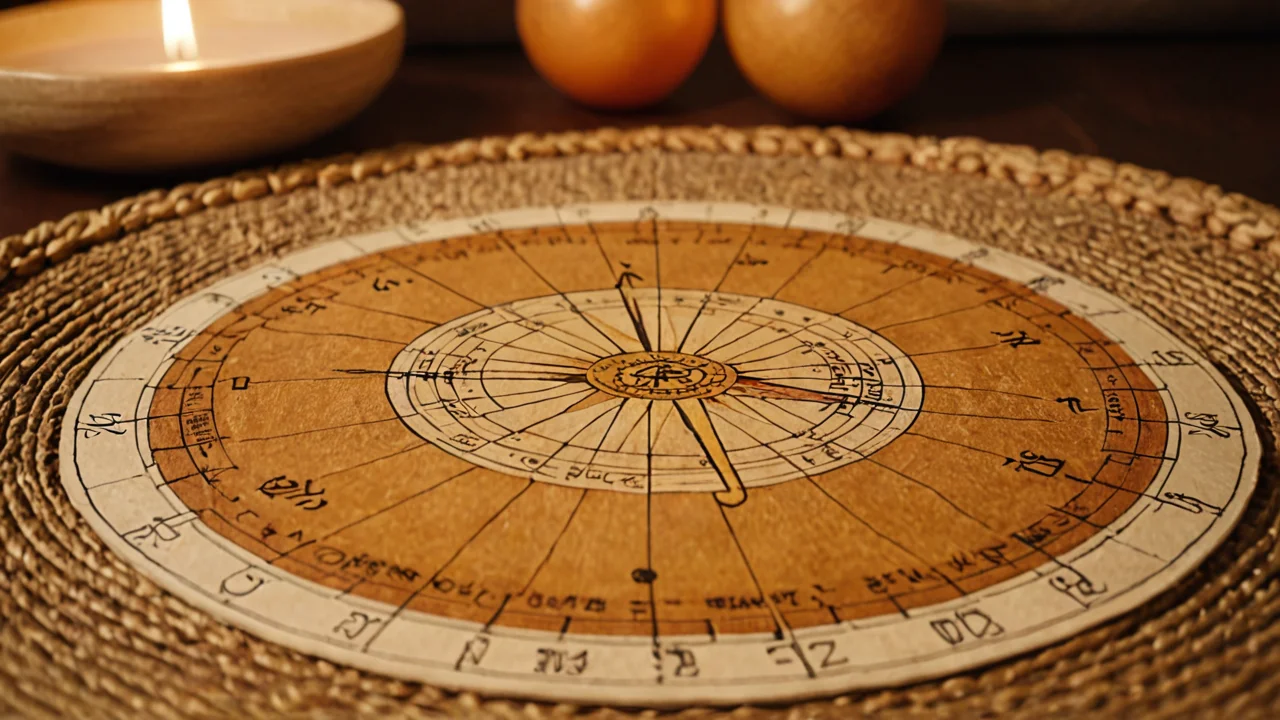
A natal chart is a diagram of the sky at the moment and place of birth, and it is built around three coordinates that matter more than the rest: the Sun's sign, the Moon's sign, and the sign rising on the eastern horizon — the Ascendant. Everything else in chart fundamentals is a matter of getting those three right, then learning how the twelve houses and the aspects between planets turn three separate placements into a single reading. The tradition that produced this structure is Hellenistic, and historical summaries describe it as the first to make the Ascendant a structural feature of natal interpretation rather than an afterthought. That is the key to the whole system: the chart is not a list of traits, it is a wheel with a fixed starting point, and where that starting point falls is the first thing an astrologer looks at.
The Ascendant is the spine of the chart, not a fourth sign
The Ascendant is the zodiac sign on the eastern horizon at the time of birth, and reference works define it exactly that way — sign, horizon, moment. The Greek term behind it, horoskopos, means hour-marker, and historical summaries note it appears in the Greek manuscript tradition associated with Ptolemy's Tetrabiblos. The name is a job description: the Ascendant marks the hour, and the hour is what fixes the wheel.
Practically, this changes how you read a chart. The Ascendant becomes the first house cusp, and the twelve houses are counted from it in order — second house next, then third, all the way around. Two people born on the same day with the same Sun sign can have entirely different house structures if their rising signs differ, because the same planet lands in a different house. That is why an astrologer will often ask for a birth time before anything else, and why a chart cast for "some time in the afternoon" is a different document from one cast to the minute.
The cost of getting this wrong is not a small error at the edges. A rising sign changes roughly every two hours, so a birth time off by an hour can move the Ascendant into the previous or next sign and shift every house cusp with it. The tradition holds that the Ascendant describes the body, the temperament, and the manner of meeting the world; if that anchor is wrong, the reading built on top of it is standing on the wrong floor. Astrologers who work this way will say plainly that an approximate birth time produces an approximate chart, and some will decline to read houses at all without a time they trust.
Sun, Moon, Ascendant: three answers to three different questions
The Sun sign is the zodiac sign the Sun occupied at birth; the Moon sign is the sign the Moon occupied at birth; the rising sign is the sign on the eastern horizon at the moment and place of birth. In the tradition these are not three flavours of the same personality. They answer different questions, and the order in which you hold them matters.
The Sun is read as the core identity — what the person is becoming, the thing they are oriented toward. The Moon is read as the inner life, habit, and emotional reflex — what soothes and what unsettles. The Ascendant is read as the interface: how the person arrives in a room, the first impression, the physical bearing. A chart with a Leo Sun, a Virgo Moon, and a Scorpio rising is not a Leo with Virgo and Scorpio sprinkled on top; it is a Leo core that handles itself with Virgo caution and presents as Scorpio to strangers. An astrologer reading that chart has to decide which layer the question is actually about — a question about career sits differently from a question about why the person cries at commercials.
The limit here is real. Sun-sign astrology, the kind printed in newspapers, collapses all three into one and is why so many people say the descriptions do not fit. The tradition itself does not claim the Sun sign is the whole chart; it treats the Sun as one placement among several, and the Ascendant as the structural one. If someone tells you they are "a Gemini" and nothing else, they are giving you the Sun and withholding the two placements that would make the picture legible. Whether the tradition's claims about temperament hold up is a separate question from whether it is internally consistent — and it is internally consistent, which is why the three-placement reading is the one practitioners actually use.
Houses are the stage; planets are the actors
The twelve houses divide the chart into areas of life — body and self, money, siblings and short journeys, home, creativity and children, work and health, partnership, shared resources and death, philosophy and travel, career and public standing, friends and hopes, and the hidden. The Ascendant is the cusp of the first, and the rest follow in order. A planet in a house is read as that planet's energy operating in that area; the sign it sits in describes the style.
This is where most beginners go wrong, and it is worth naming the failure mode. A beginner learns Sun in Leo and stops. An astrologer asks: which house? Sun in Leo in the first house reads as a person whose identity is visibly on display; the same Sun in the twelfth reads as someone whose core is private, even hidden. Same sign, different life. The house is not decoration — it is the difference between a trait and a situation.
The honest cost of house-based reading is that it demands a birth time, and it demands a house system. Astrologers argue about house systems the way carpenters argue about joint types: whole sign houses, which the Hellenistic tradition used and which simply assign each sign to one house from the Ascendant; Placidus and Koch, which divide by time and produce uneven houses; equal houses, which split from the Ascendant into twelve equal arcs. Whole sign is the cleaner choice for a beginner because it never produces intercepted signs or a house that swallows two signs, and it matches the Hellenistic material. Placidus is the more common default in modern Western practice and handles high latitudes badly — above the Arctic Circle some house systems break down entirely and produce houses that do not exist. If you were born far north, this is not a technicality; it is a reason to know which system your chart was cast in before you trust its house placements.
Aspects: how the placements talk to each other
An aspect is an angular relationship between two points in the chart, measured in degrees of the zodiac. The tradition works with a small set of them — the conjunction, the opposition, the trine, the square, and the sextile — and reads each as a different kind of conversation. Conjunctions blend; oppositions pull against each other across the wheel; trines and sextiles are described as flowing; squares as friction that forces action. An astrologer reading a chart looks first at which planets aspect the Sun, the Moon, and the Ascendant, because those are the load-bearing points.
The thing to understand about aspects is that they are geometry, not verdicts. A square between two planets is not a bad chart; the tradition holds it as tension that produces movement, and plenty of astrologers will tell you the friction is the useful part. What matters is the orb — how close the angle is to exact. A conjunction within a degree or two is read as tight and dominant; the same conjunction eight degrees apart is read as background noise. Astrologers differ on how wide an orb to allow, and the disagreement is not trivial: widen the orb and every chart becomes dense with connections; narrow it and half the chart goes quiet.
The trade-off of aspect work is complexity. A beginner who tries to hold every aspect between every pair of planets in their head will drown. The practical sequence is to read the three lights first — Sun, Moon, Ascendant — then the aspects to those three, then the rest. Skipping that order is how people end up with a reading that is technically complete and says nothing.
What a chart can and cannot tell you
A natal chart is a diagram of positions at a moment, and the tradition reads meaning into those positions. It does not predict events in the way a weather forecast does. Astrologers who take the tradition seriously will describe the chart as describing conditions and tendencies — the terrain a person is working with — not a script. The distinction matters in practice: a chart with a difficult Mars placement is read as a person who has to learn to handle anger or force, not a person destined for an accident. The tradition's own language is about inclination and temperament, and the further a reading drifts from that into specific predictions, the further it drifts from what the source material actually claims.
There is also a hard limit on precision that comes from the birth time itself. Hospitals record times in round numbers; families remember "around dawn"; some places did not issue birth certificates with a time at all. Astrologers have developed rectification — working backward from known life events to infer a birth time — but it is a technique with a lot of room for error, and a chart rectified from three or four events is a hypothesis, not a fact. If you do not have a reliable time, the honest move is to read the Sun and Moon and the aspects between planets, and treat the houses and Ascendant as provisional. That is a smaller chart, but it is a chart you can actually stand on.
The other limit is interpretive. Two competent astrologers can read the same chart and disagree about emphasis, because the tradition has never had a single authoritative reading method. Hellenistic practitioners work with sect, triplicity, and whole sign houses; modern psychological astrologers work with elements, Jungian archetypes, and Placidus. They are not doing the same thing. Knowing which tradition a reading comes from tells you more about what it will say than any single placement does.
The order of operations that actually works
Read the chart in this sequence and the rest follows: Ascendant first, because it sets the wheel; then the Sun and Moon by sign and house; then the aspects to those three points; then the remaining planets; then the broader pattern — how the elements and modes balance, whether one house is crowded, whether any planet stands alone. This order is not arbitrary. It moves from the structural to the specific, which is the only direction that keeps a reading coherent.
Here is what each step costs you. Starting with the Ascendant requires a birth time, so it is the step most likely to be unavailable. Starting with the Sun is cheaper but flatter — it is the newspaper reading, and it is popular because it needs no time at all. Starting with aspects before you know the houses produces a web of connections with nothing to attach them to. Every shortcut in chart fundamentals trades precision for convenience, and the trade is worth making only when you know you are making it.
A comparison of the common entry points makes the trade-offs concrete:
| Entry point | What it needs | What it gives | What it costs |
|---|---|---|---|
| Sun sign only | Date of birth | A single, broad identity statement | No houses, no Ascendant, no aspects; the reading most people find does not fit |
| Sun, Moon, Ascendant | Date, time, and place | The three-placement core the tradition actually reads | Requires a trustworthy birth time; a wrong time corrupts the Ascendant |
| Full chart with houses | Accurate time and a chosen house system | Placements in life-areas; the difference between a trait and a situation | House-system disagreement; high-latitude breakdowns; more moving parts than a beginner can hold |
| Full chart with aspects | All of the above, plus orb conventions | How the placements interact; which points dominate | Density and disagreement over orbs; easy to over-read |
For most people the second row is the right place to stop for a while. The three-placement reading is where the tradition's own structure lives — the Ascendant as hour-marker, the Sun as core, the Moon as inner life — and it is the smallest unit that produces a reading you can check against your own experience. Move to houses when you have a birth time you trust and have picked a house system on purpose rather than by default. Move to aspects when the houses have stopped surprising you. The chart does not reward speed; it rewards knowing which layer you are standing on.