
Your Sun sign is the sign the Sun occupied at your birth, your Moon sign is the sign the Moon occupied at your birth, and your rising sign is the zodiac sign on the eastern horizon at the moment and place of birth. Those three are the load-bearing pieces of a natal chart, and they answer three different questions: what you're made of, what you need, and how you arrive. Everything else in the chart refines those answers rather than replacing them. Understanding yourself through astrology is mostly a matter of learning which question each placement is actually answering, and then being honest about where the tradition stops and your own judgment has to start.
Sun, Moon, and Ascendant: three different jobs
The Sun sign gets treated as the whole personality in newspaper columns, and that's the single most common reason people find astrology unsatisfying. In the tradition the Sun is one factor among several, and the Ascendant is the structural one. Scholarship on Hellenistic astrology describes that tradition as the first to make the Ascendant a structural feature of natal interpretation and to build the chart around it. The Greek term horoskopos meant hour-marker and appears in the Greek manuscript tradition associated with Ptolemy's Tetrabiblos — the rising degree is literally the marker of the hour you were born, which is why birth time matters more than almost anything else you can supply.
Practically, the three function like this. The Sun sign is what you're oriented toward — the thing you're trying to become, in the loose shorthand practitioners use. The Moon sign is the appetite-and-reflex layer: what settles you, what you reach for when you're depleted, the mood that shows up before you've decided to have one. The Ascendant is the interface — the style you meet the world in, the first impression, the way you handle a room before you've said anything considered. People often report that their rising sign describes how strangers read them and their Moon describes how people who live with them read them, which is a reasonable folk summary of the division of labor.
The limit is real: the three are not a personality test and they don't agree with each other by design. A chart with a Leo Sun, a Cancer Moon, and a Scorpio Ascendant is not a contradiction to be resolved; it's three descriptions at three levels, and the work is noticing which one is running in a given situation. That's a more interesting exercise than reconciling them into a single tidy paragraph, and it's also where most people quit.
Why the birth time is the decision, not a detail
Without a birth time you cannot calculate a rising sign at all, and you can't place the planets in houses. The Ascendant is defined by the eastern horizon at your moment and place of birth, and the horizon moves through the whole zodiac in a day, so a birth certificate time is worth more to a chart than any amount of self-reporting. If you have a time on a certificate, a hospital record, or a baby book written the same day, use it. If you have a time someone remembers from a conversation decades later, treat it as approximate and say so when you read the chart.
What approximate times cost you: the Ascendant changes sign roughly every couple of hours, so a time that's off by more than a little can shift the rising sign entirely, and with it the whole house framework. The Moon moves fast enough that a time error of some hours can push it into the previous or next sign. The Sun and the slower planets barely care. So a chart with an uncertain time is still usable for Sun, Moon (with caution), and the aspects between planets — it's the angles and the houses that go soft first, and those are exactly the parts a Hellenistic-style reading leans on hardest.
If you genuinely don't know the time, the honest options are: read the chart without houses and without an Ascendant, and accept that you're getting a partial picture; or use a rectified time, which means working backward from life events to a plausible birth time. Rectification is a real practice and it costs real effort — it's a conversation with a practitioner, not a button on a website — and its results are only as good as the events you feed it. The trade-off is worth naming plainly: a rectified chart is a hypothesis dressed as a fact, and it's most dangerous when it's presented without that caveat.
Reading the chart as a whole rather than a list of placements
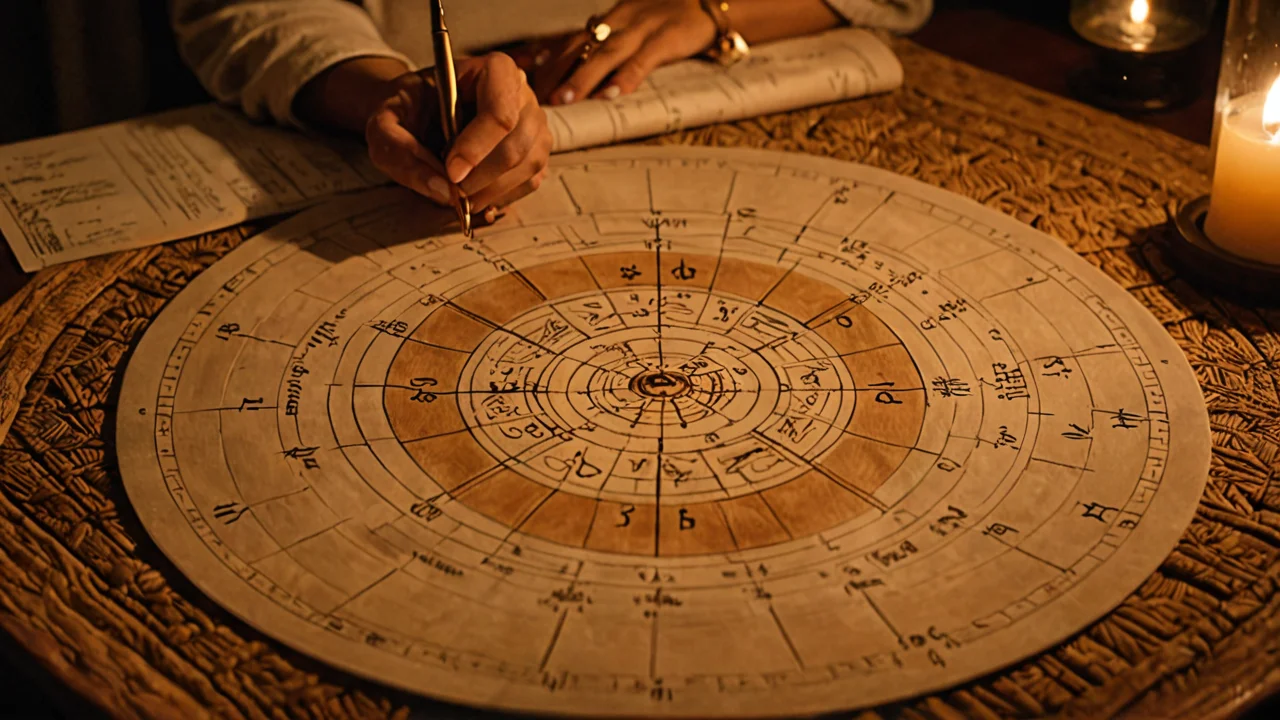
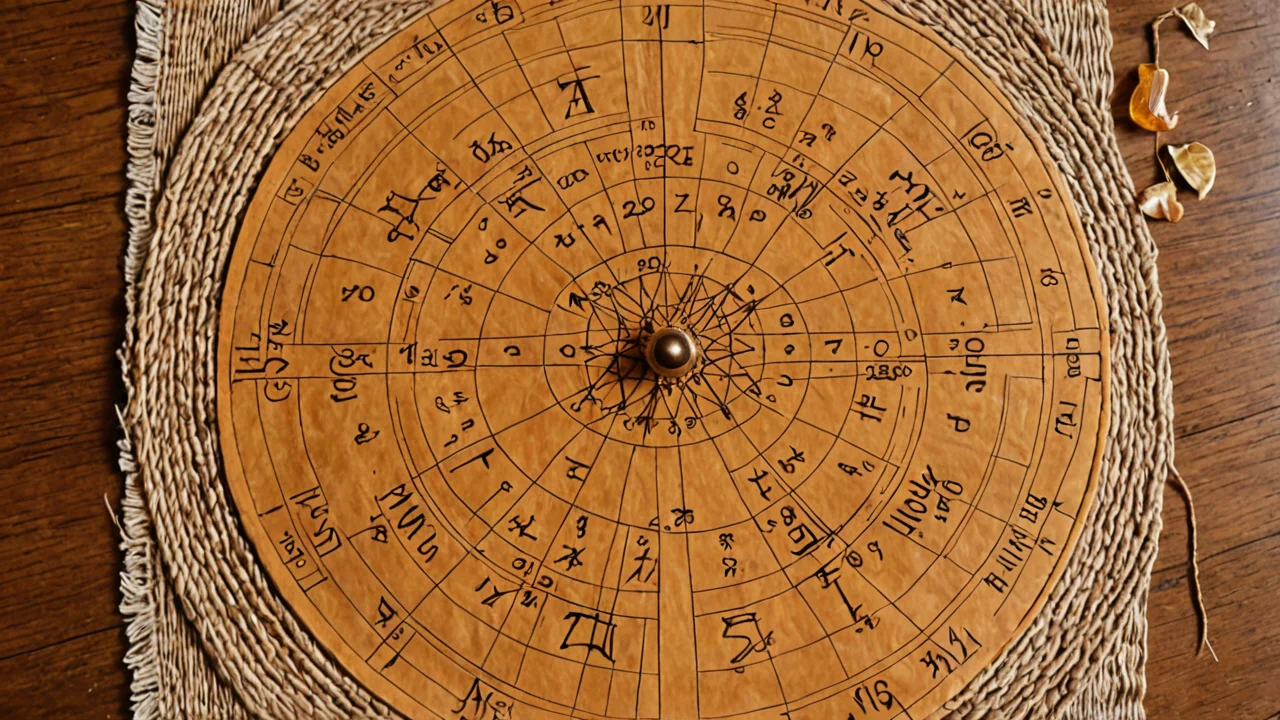
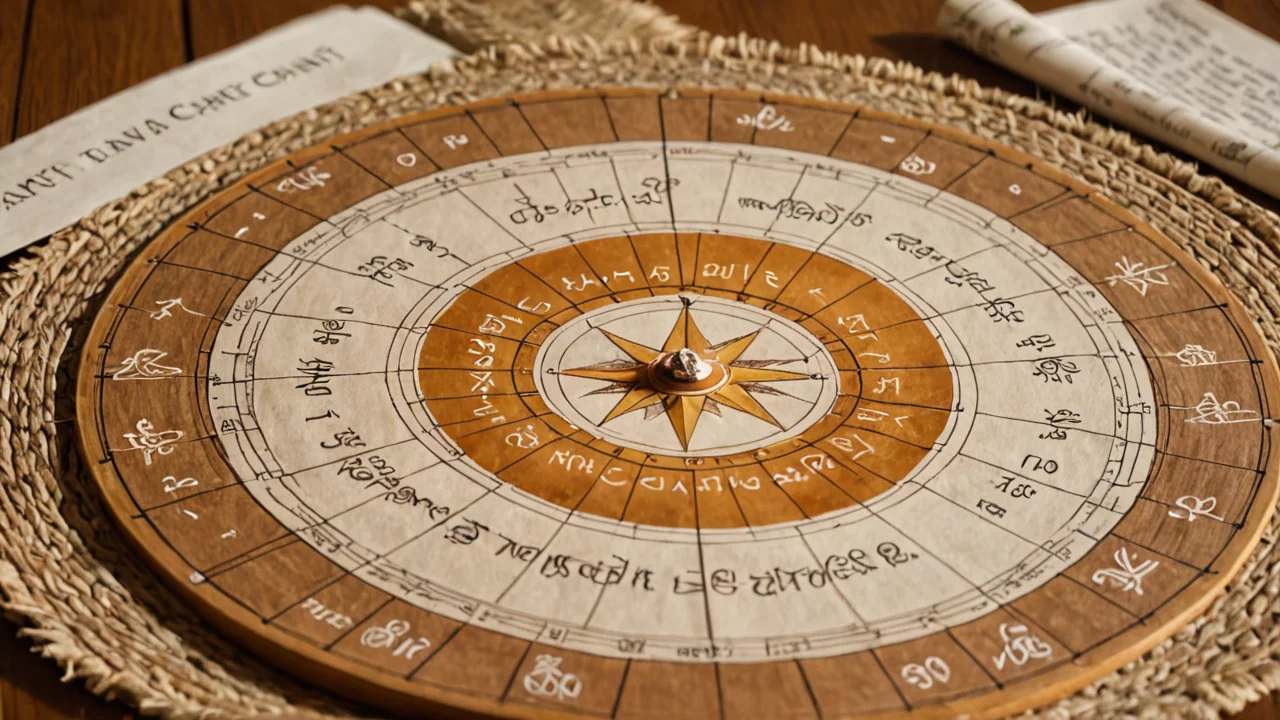
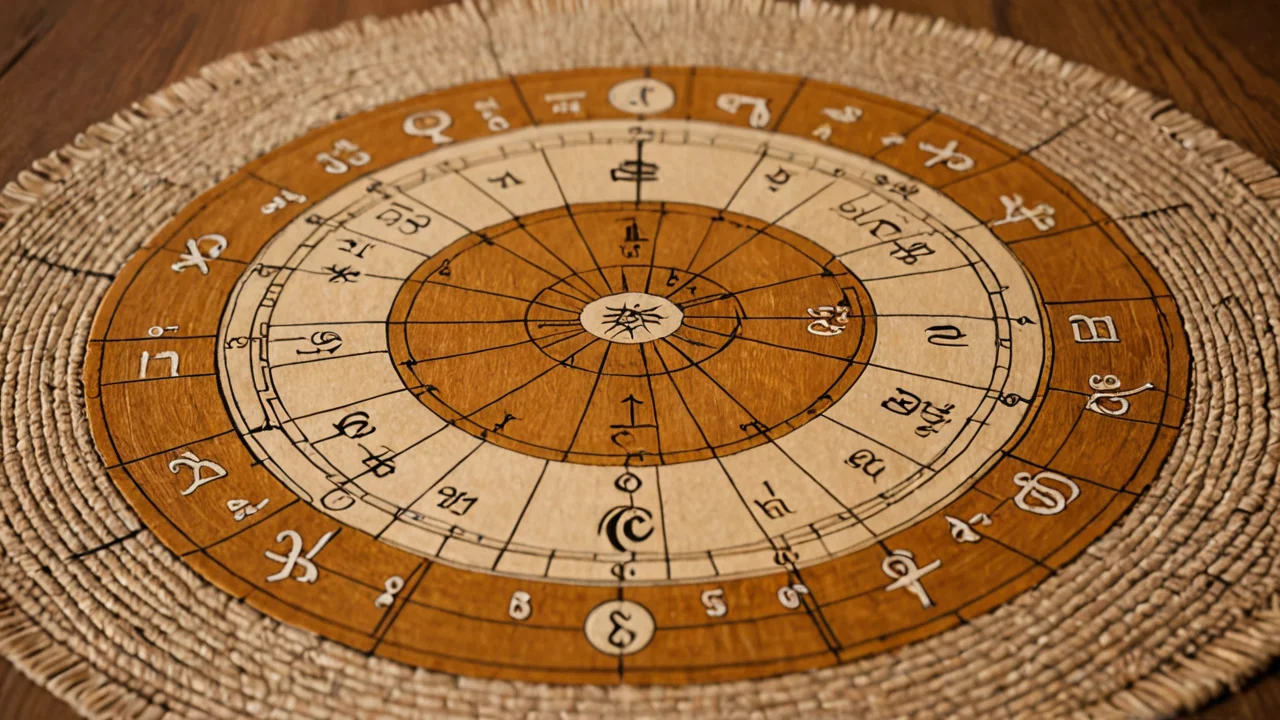
A natal chart is a diagram of where the Sun, Moon, planets, and angles sat at your birth, and its meaning in the tradition comes from relationships, not from isolated entries. Two charts can share a Sun sign and a Moon sign and behave nothing alike because the planets are in different houses, aspecting different things, ruled by different planets. The list-of-placements approach — Sun in this, Moon in that, Venus in the other — is a vocabulary, not a reading. You need the grammar.
The grammar, in the order it's usually taught: first the Ascendant and its ruler, because the tradition builds outward from the rising degree; then the Sun and Moon as the two lights; then the house positions, which tell you where a planet's business is conducted; then the aspects, which tell you which planets are talking to each other and whether the conversation is cooperative or abrasive. Doing it in that order keeps you from over-weighting a single dramatic placement — a Mars in the first house will feel urgent, but its urgency gets directed by whatever is ruling the Ascendant.
The cost of reading holistically is time and discomfort. It takes longer than looking up three signs, and it will sometimes tell you something about a pattern you'd rather not examine. The benefit is that it stops producing the flat, generic descriptions that make people roll their eyes. If you only ever learn your Sun sign, you'll keep getting a description that's about a third right, and you'll conclude the tradition is thin rather than that you read a third of it.
What the tradition claims, and what it doesn't
Astrology is a tradition of interpretation, not a physical claim about the world, and the difference matters most when you're reading about yourself. In the tradition, a placement is held to describe a tendency, a disposition, a way a person is likely to meet circumstances — not a fixed outcome and not a verdict on character. The tradition holds that the Ascendant shapes how a person presents; it does not hold that the Ascendant causes anything measurable. Practitioners describe recognition when they read their own charts, and that recognition is the phenomenon worth explaining, whatever you conclude causes it.
This is where most self-knowledge writing about astrology goes wrong, so be suspicious of it. You'll see claims that a placement produces better sleep, lower tension, improved relationships, or a specific health outcome. That's not what the tradition says and it's not something a chart can tell you. What the tradition offers is a vocabulary for patterns — a way of naming the difference between how you handle conflict and how you'd like to, or between the mood you wake up in and the mood you perform. Whether that vocabulary fits you is something you check against your own life, not something the chart settles for you.
The honest cost of this framing is that it gives you less certainty than the confident version. You don't get to say "this is just how I am, it's in the chart." You get a description, and then you decide what to do with it. That's a worse sales pitch and a better tool.
Where people go wrong, and how to notice
The most common failure is treating the Sun sign as the answer and then being disappointed. The second most common is treating a single hard aspect as fate — seeing a Saturn square and reading it as a sentence rather than a description of a pressure pattern that shows up in specific situations and can be worked with. The third is using the chart to excuse behavior instead of to notice it. All three come from the same mistake: reading one piece of the diagram as if it were the whole diagram.
You can spot a bad reading by its shape. Good readings name specifics and leave room: they'll say a person tends to over-prepare before unfamiliar social situations, or that they go quiet rather than argue and then resent it later. Bad readings are unfalsifiable and flattering in a generic way, or they're ominous without being useful. If a description could apply to almost anyone, it isn't doing work. If it can't be wrong, it isn't either.
The other thing to watch for is the reading that arrives with too much confidence about your birth time. If someone gives you a detailed house-based interpretation and never asks how certain the time is, you've learned something about the reader. Ask. The answer should be a number of minutes, or an admission that there isn't one.
The order to work in, and what each step buys you
Start with the birth data and get it as exact as you can before you read anything. Then learn the three: Sun, Moon, Ascendant. Sit with them for a while — long enough to notice which one describes your interior and which describes your exterior, and where you disagree with the description. That disagreement is data too. Only after that is it worth going into houses, rulerships, and aspects, because those are the layers that depend on an accurate time and on your having a feel for the basics.
What each step buys you, in order:
- Birth data. Buys you the Ascendant and the houses. Without it, everything downstream is provisional.
- The three lights and the rising sign. Buys you a working sketch — enough to test the tradition against your own experience and decide whether it's worth your time.
- Houses. Buys you specificity: not "you are like this" but "you are like this in this area of life." This is where readings stop sounding generic.
- Aspects and rulership. Buys you the relationships between the parts, which is what makes a chart read as a portrait rather than a list.
- Transits and timing. Buys you the moving picture. It's also the layer most dependent on everything above being right, and the one to be most skeptical of early.
The trade-off at each step is the same: more specificity costs more dependence on accurate data and more willingness to be wrong. A Sun-sign reading is nearly free and nearly useless. A full chart reading is expensive in time, requires a birth time you may not have, and will occasionally land on something uncomfortable. The middle ground — three placements, read carefully, tested against your life over a few weeks — is where most people get the most for the least, and it's a perfectly respectable place to stop.
What you're doing, at bottom, is using a symbolic system to notice things about yourself you'd otherwise skim past. The tradition holds that the chart describes; it doesn't hold that the chart decides. The useful question is never "what does this placement mean" in the abstract, but "does this description match what I actually do, and if so, what do I want to do about it." That question doesn't need a chart to be worth asking. The chart just gives you somewhere to start.
The two lights are the part of the chart you can test fastest
If you want to check whether the tradition is describing anything real about you, start with the Moon rather than the Sun. The Moon is the fastest body in the chart and the one practitioners most often describe in terms of reflex: what you reach for when you're depleted, the mood that arrives before you've decided to have one. That's a claim you can test in a week. Watch what you do on the evening of a bad day — what you eat, who you call, whether you go quiet or go out — and hold it next to your Moon sign's description. The Sun sign is harder to check because it's aspirational and slow-moving; the Moon shows up in behavior you can observe.
The trade-off is that the Moon is also the placement most sensitive to a bad birth time. It moves fast enough that an error of some hours can push it into the previous or next sign, which means a Moon reading built on a remembered time is a reading built on sand. Get the time from a certificate or hospital record before you take a Moon interpretation seriously, and if you can't, treat the Moon sign as one of two candidates rather than a settled fact.
Disagreement with the description is the useful part
The moment a placement stops matching how you actually behave is more informative than the moment it fits. Practitioners describe recognition when they read their own charts, but the misses are where the reading gets specific: a description that's wrong in a particular way tells you which level of the chart is running — the interface, the appetite, or the orientation — and it tells you the tradition's vocabulary is pointing at something adjacent rather than exact. Write the disagreement down. "Says I go quiet rather than argue; actually I argue and then go quiet" is a sharper self-observation than any description the chart handed you.
What this costs is the comfort of the chart as authority. You don't get to say the placement is simply how you are; you get a description, a mismatch, and a decision about which one to trust. That's a worse sales pitch and a better tool, and it's the reason the tradition holds that the chart describes rather than decides.